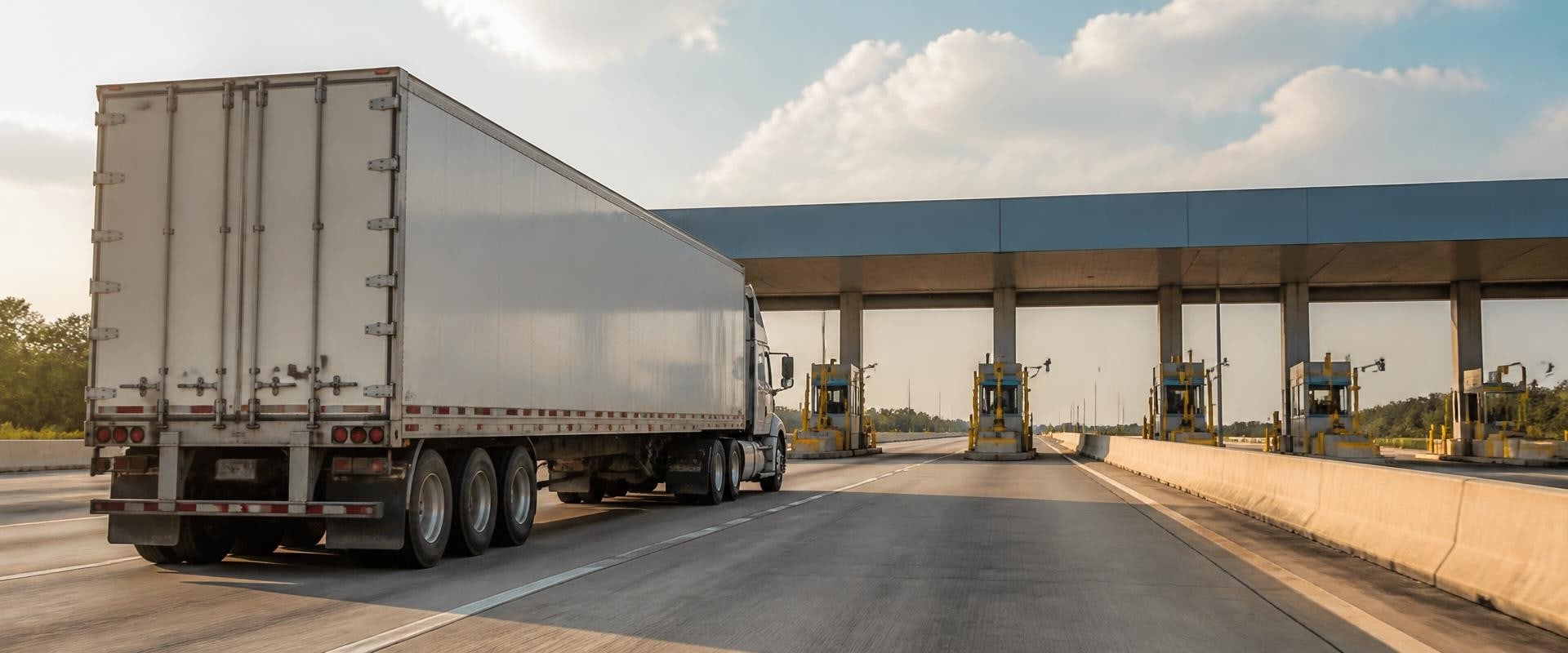
Commercial trucking is one of the primary ways goods move between cities, states, and regions, but long-distance transportation involves far more than fuel and driver wages. Toll roads, bridges, tunnels, and turnpikes can add significant expenses to a route, particularly for large commercial vehicles. Truck tolls are often calculated differently from passenger vehicle fees because rates may depend on the number of axles, vehicle weight, distance traveled, or time of day. For carriers that operate across several toll-heavy regions, these charges can accumulate quickly. As a result, toll expenses must be considered when transportation companies establish freight rates, evaluate routes, and estimate the overall cost of moving goods.
Calculating Toll Expenses
Before dispatching a truck, transportation companies often compare several possible routes to determine which option provides the best balance of time, fuel consumption, and toll costs. A route with fewer miles may include expensive toll roads, while a longer alternative may avoid tolls but require additional fuel and driving time. Dispatchers must calculate whether the savings from avoiding tolls outweigh the added operating expenses. Vehicle configuration also matters because a tractor-trailer with multiple axles may face substantially higher toll charges than a smaller commercial vehicle. Accurate route planning helps carriers provide more dependable cost estimates while minimizing unexpected expenses during transportation.
How Tolls Influence Freight Pricing
Toll charges are typically included as part of a carrier's operating costs and may ultimately influence what customers pay for shipping. Depending on the carrier and freight agreement, tolls may be included within the standard transportation rate or listed as separate surcharges. Businesses shipping products over long distances should therefore consider toll expenses when creating logistics budgets. This is especially important for companies moving high volumes of freight regularly, since even relatively small toll increases can become significant when multiplied across hundreds of trips. Maintaining clear records of routes and toll charges can help logistics managers identify opportunities for cost savings.
Managing Equipment Between Long Routes
Transportation expenses are also affected by how efficiently companies manage vehicles, trailers, and supporting equipment between assignments. Trucks that travel unnecessary miles to retrieve supplies or reposition equipment can increase fuel and labor costs in addition to potential toll expenses. Companies may organize trailers, spare parts, and other assets near important transportation corridors to simplify operations. Some businesses may also use dedicated facilities for specialized needs such as RV storage, equipment holding, or temporary vehicle placement when additional space is required. Keeping assets strategically located can reduce unnecessary travel and help companies prepare more efficiently for upcoming routes.
Considering Time Versus Cost
Avoiding toll roads is not always the least expensive option. Toll highways are often designed to provide faster or more direct travel around congested urban areas. Choosing a toll-free route may add significant driving time, increasing fuel consumption and potentially affecting driver hours-of-service limitations. Delays may also result in missed delivery appointments or require additional overnight stops. Transportation planners therefore need to evaluate the complete cost of each route instead of considering toll fees in isolation.
Using Technology to Improve Route Planning
Modern fleet management systems and navigation tools can help trucking companies estimate toll expenses before vehicles depart. These systems may compare alternative routes, calculate mileage, monitor traffic, and identify restrictions for commercial vehicles. Electronic tolling systems can also simplify payment and provide records that companies can use for accounting and route analysis.
Controlling Long-Distance Transportation Costs
Commercial truck tolls are only one component of freight transportation expenses, but they can have a measurable impact on long-distance shipping budgets. By comparing routes, tracking toll payments, managing equipment efficiently, and considering the relationship between travel time and operating costs, trucking companies can make more informed decisions. Effective toll management ultimately supports more accurate freight pricing, predictable delivery schedules, and greater control over the overall cost of transporting goods across long distances.